

What is so profound about the Christmas Story?
The Christmas story is profound not because it is sentimental or familiar, but because it is radically disruptive. At its heart, Christmas proclaims that God chooses to enter the world not through power, wealth, or domination, but through vulnerability, humility, and love. This is not how empires announce themselves. It is how God reveals God’s self.
The story begins on the margins. An occupied land groans under Roman rule. A young, poor, unmarried woman is chosen to bear God’s promise. A child is born not in a palace but among animals, laid in a feeding trough. Shepherds—workers considered unreliable and unclean—are the first witnesses. Foreign astrologers, not religious insiders, recognize the child’s significance. Every detail challenges assumptions about who matters, where God is found, and how salvation comes.
What makes Christmas so profound is that it reveals the character of God. In Jesus, God does not remain distant from human suffering but enters fully into it. The incarnation declares that bodies matter, that poverty matters, that fear and displacement matter. God is not embarrassed by human weakness; God embraces it. In a world still marked by violence, inequality, and exclusion, this is good news.
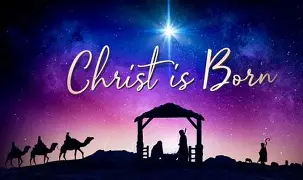
Christmas is also profoundly political. The Gospel writers are careful to situate Jesus’ birth during the reign of Caesar, whose titles included “Savior” and “Lord.” By announcing peace on earth through a newborn child, the angels are making a quiet but daring claim: true peace does not come from military might or imperial control, but from God’s justice and reconciling love. The Christmas story asks us to decide which vision of peace we will trust.
For Pentecostal and Charismatic Christians, Christmas reminds us that the Spirit is at work in unexpected places and people. Mary’s song—the Magnificent—is a Spirit-filled proclamation of social reversal: the proud scattered, the powerful brought down, the hungry filled with good things. This is not a tame holiday message. It is a prophetic vision of a world made right.
Perhaps most profoundly, Christmas tells us that hope is born small. God’s redemptive work does not arrive fully formed and triumphant; it begins as a fragile life that must be nurtured, protected, and trusted. That is an invitation to us. In our peacemaking, justice-seeking, and Spirit-led witness, we often long for immediate transformation. Christmas teaches us to look for God in seeds rather than spectacles.
The Christmas story endures because it speaks into every age of crisis and longing. It assures us that God is not absent from our broken world. Emmanuel—God with us—is not an abstract idea but a lived reality. And if God can be found in a manger, then no place, no person, and no situation is beyond the reach of God’s redeeming love.
Christian faith has long proclaimed a startling truth: Jesus Christ was born to die.
Yet this is not a statement of despair. It is an announcement of hope, healing, and reconciliation—a declaration that God chose the path of self-giving love to restore the world.

1. The Cross Reveals the Self-Giving Love of God
Jesus’ death was not a divine demand for violence but God entering our violence to redeem it.
Scripture says:
“God was in Christ, reconciling the world to himself” (2 Cor 5:19).
The cross is not the Father punishing the Son.
It is God in Christ absorbing hatred, injustice, and sin to reveal a love that suffers for the sake of others.
This is the heart of Spirit-filled discipleship:
love poured out, even when it costs us something.

2. Jesus Was Born for the Mission of Reconciliation
Incarnation, ministry, teaching, healing, death, resurrection—they are one seamless mission:
to restore peace (shalom), justice, and communion between God, humanity, and creation.
His death was decisive because it:
- broke the power of sin and death,
- exposed the injustice of earthly systems,
- reconciled estranged humanity to God,
- inaugurated a kingdom built on mercy, justice, and peace.
Jesus was born to die because His love would carry Him all the way into the world’s deepest wounds.

3. The Cross Shows God Entering Human Suffering
God does not save from a distance.
In Christ, God enters:
- oppression,
- fear,
- abandonment,
- violence,
- death itself.
By embracing these realities, Jesus transforms them.
Resurrection is not escape—it is new creation breaking forth.
For a Spirit-empowered people, this means that Christ is present not only in miracles and revivals but also in the struggle for justice, the work of healing trauma, and the long labor of peacemaking.
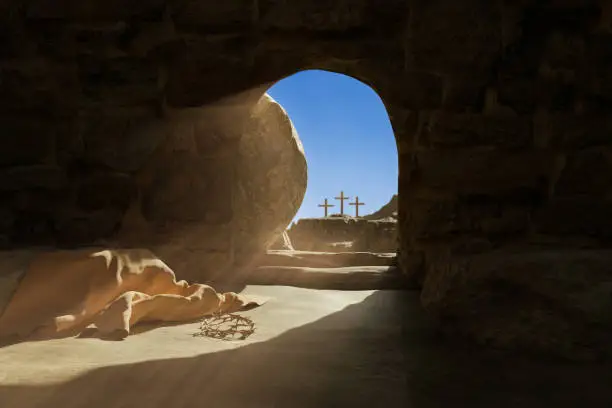
4. In His Death, Jesus Defeats the Powers
The “powers and principalities”—systems that rely on fear, domination, and injustice—are confronted at the cross.
“He disarmed the rulers and authorities… triumphing over them by the cross” (Col 2:15).
This is a nonviolent victory.
The powers are defeated not by greater force but by greater love.
This shapes our calling:
We resist injustice not with the weapons of the world, but with the courage, truth, and compassion born of the Spirit.

5. Jesus Was Born to Die—So That Life Could Begin
The story does not end at the cross.
Jesus was born to die and rise, so that:
- peace would become possible,
- the Spirit would be poured out,
- the Church would be empowered for mission,
- new creation would begin in us.
Christ’s purpose in dying was not death but life—abundant, Spirit-filled, world-transforming life.
A Cross-Shaped Mission for a Spirit-Empowered People
To follow Jesus is to recognize that the way of the cross is God’s way of healing the world.
It is the path of:
- peacemaking,
- enemy-love,
- justice-seeking,
- mercy-giving,
- Spirit-led reconciliation.
Jesus was born to die because God’s love is willing to enter the world’s brokenness to make all things new.